
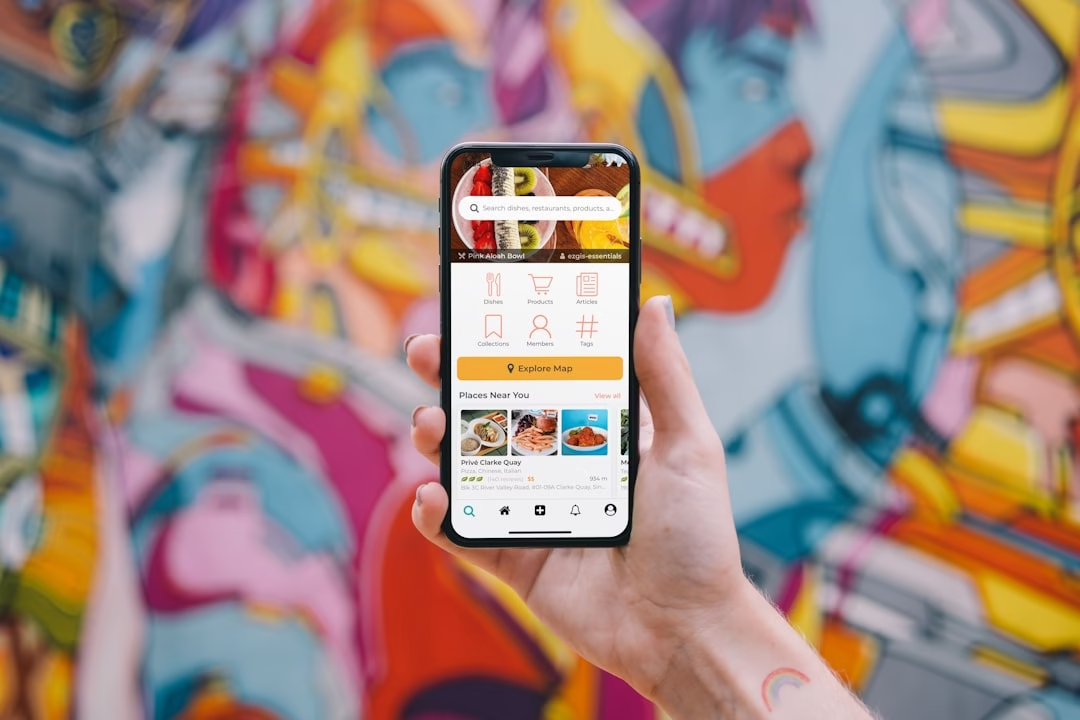
Static banner ads are easy to scroll past. Interactive ads, ones a viewer can tap, swipe, or play with, consistently earn more attention and better recall. Here is how to use them well.
What Counts as an Interactive Ad
Playable ads, shoppable video, polls and quizzes embedded in social feeds, and AR try-on filters are all common formats. What they share is that the viewer does something, rather than just watching passively.
Why They Outperform Static Ads
Interaction requires attention, which naturally improves recall of the brand and message. It also gives the advertiser a much clearer signal of genuine interest, since someone who plays with an ad for ten seconds is a meaningfully different prospect than someone who scrolled past a static image.
Best Practices That Actually Matter
Keep the Interaction Simple
A single clear action, like a swipe or a tap, works far better than a multi-step interaction most users will not bother finishing.
Make the Payoff Worth It
The interaction should lead somewhere useful, a real discount, a genuinely helpful result, or an entertaining payoff, not just a dead end that feels like a gimmick.
Design for Mobile First
Most interactive ad formats are viewed on a phone. Test the interaction on a real device before launch, not just in a desktop preview.
The Numbers Behind the Trend
The performance gap between interactive and static ads isn’t marginal. IAB’s Rising Stars benchmarks put interactive ad engagement at 5 to 10 times higher than static display, with some campaigns seeing engagement lift of up to 47% over static equivalents. Interactive shoppable video specifically has been reported to outperform static formats by around 187% on engagement, and interactive video completion rates commonly land in the 80-90% range, well above the roughly 58% typical of standard video ads. Treat these as directional evidence that interaction works, not a guarantee your specific campaign will hit the same numbers – results vary a lot by format, industry, and execution.
Interactive Ads Are Getting Cheaper to Produce
One of the biggest shifts in 2026 is cost. AI-assisted creative tools can now generate playable HTML5 ads, AR lenses, and quiz-style units from a single product link, which has pushed production costs down from what used to be a five-figure job to something closer to four figures. That matters most for smaller advertisers – interactive formats used to be something only large brands with big production budgets could justify, and that’s no longer entirely true.
Where Interactive Formats Are Showing Up Next
Short-form video platforms are leading this shift — see what actually drives results in our breakdown of what makes a TikTok campaign perform.
Connected TV is the newest place interactive ads are appearing at scale: platforms like Roku, Amazon Fire TV, and Samsung Ads now support shoppable units that let a viewer finish checkout on a paired phone without leaving the couch. Early reporting from Walmart Connect and Amazon Ads on this format has shown a meaningful lift over standard CTV video ads. AR remains a major channel too – Snapchat alone reported more than 350 million people using its AR experiences daily, with lenses played roughly 8 billion times a day. That’s a real audience already comfortable interacting with ads, not a novelty.
Where They Fit in a Campaign
Interactive formats tend to work best for awareness and consideration stages, where the goal is memorability, rather than as the final step before a purchase.
What to Actually Call These When You’re Setting Up a Campaign
TikTok’s ad platform names its interactive formats directly: Playable Ads (an interactive HTML5 mini-preview of an app or game), Video Shopping Ads with integrated product cards for in-feed purchases, and Interactive Add-Ons layered on top of standard video ads. Meta supports its own Playable Ads format plus Shops-integrated shoppable units across Facebook and Instagram. Knowing the actual format name in each platform’s ad manager saves time when you’re briefing a designer or setting up a campaign – “interactive ad” is a category, not a setting you’ll find in any dashboard.
How to Measure Whether an Interactive Ad Is Actually Working
Engagement rate is the easiest metric to report and the easiest one to be misled by. A high tap or completion rate tells you the format caught attention, not that it drove a business result. Track interaction rate alongside a downstream metric that matters for the campaign stage – click-through to your site for a consideration campaign, or actual conversion rate for anything closer to a purchase decision. If interaction is high but the downstream number doesn’t move, the format is entertaining people without moving them further, which usually means the payoff or the follow-up offer needs work, not the interactive mechanic itself.
Getting Started Without a Big Production Budget
You don’t need an AR lens or a custom playable game to test whether interactivity helps your campaigns. Start with the cheapest formats first: a poll or quiz embedded in a social ad, or a swipeable carousel showing different products or use cases. These take a fraction of the production effort of a full playable ad and still give you a real signal about whether your audience responds better to interaction before you invest in anything more complex.
Interactive Ads and Accessibility
An interactive format that only works for someone who can see the screen and use a mouse or touch input excludes part of the audience before the campaign even starts. Basic checks that agencies increasingly build into interactive ad QA: is every interactive element reachable by keyboard or a single tap, does the ad make sense with sound off (most video and interactive ads autoplay muted), and does the ad still communicate its core message if the interactive layer fails to load. A poll or quiz overlay that never appears because of an ad-blocker or slow connection should still leave behind a normal, readable ad underneath — not a blank unit.
What Agencies Get Wrong When They First Try Interactive
The most common early mistake isn’t creative, it’s scope: teams build an elaborate interactive experience for a channel or placement that doesn’t support it, then discover the format degrades to a static fallback on half their impressions. Before commissioning an interactive build, confirm exactly which placements (feed, stories, in-article) and which devices actually render the interactive version, and budget for the static fallback to be genuinely good on its own, since it’s often the version most of the audience will actually see.
Frequently Asked Questions
Are interactive ads more expensive to produce?
Usually yes, but the improved engagement and recall often justify the extra production cost for awareness campaigns.
Which platforms support interactive ad formats?
Meta, TikTok, and Google all support some form of playable or interactive ad unit, though the exact formats available change over time, so check current platform documentation before planning a campaign.
Want an ad campaign built around what actually gets attention? See our Google Ads management service, or get in touch.
