
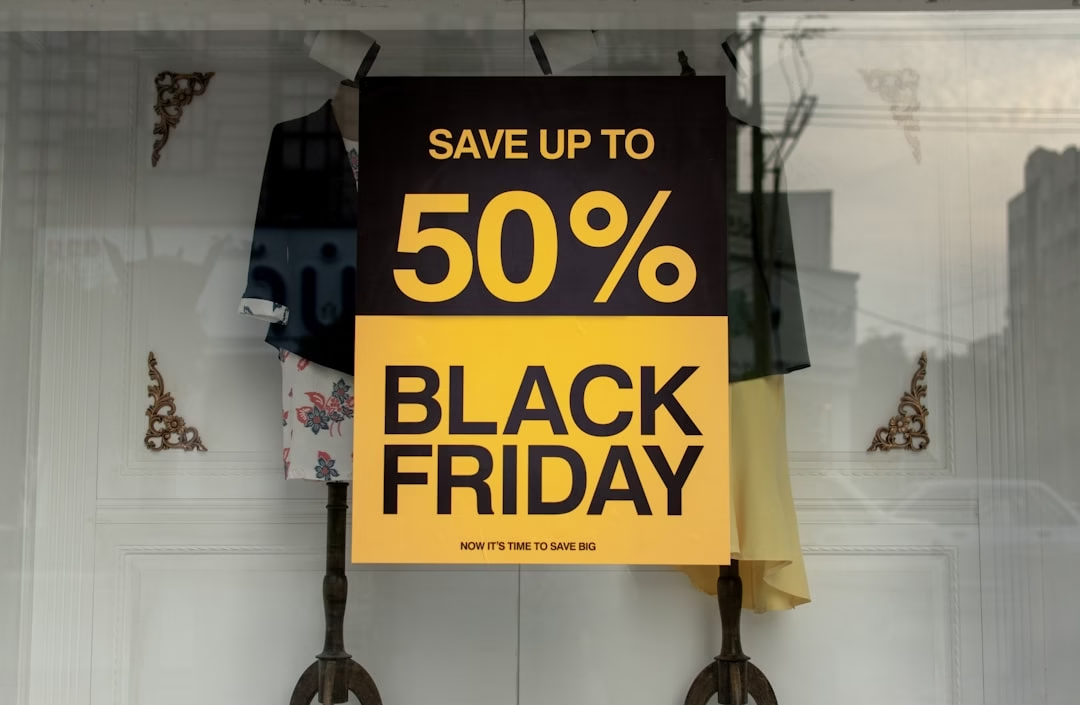
BFCM stands for Black Friday/Cyber Monday — the biggest shopping weekend of the year, and for most ecommerce businesses, a disproportionate share of annual revenue compressed into just a few days. What many store owners miss is that BFCM’s SEO implications start months before the actual weekend, not during it — by the time Black Friday arrives, the search visibility battle for that traffic has largely already been decided.
Why BFCM Pages Need to Be Indexed Months in Advance
Search engines need time to crawl, index, and build ranking signal for a new or updated page — this process rarely happens overnight, and definitely doesn’t happen fast enough to help a page published the week of Black Friday itself. A BFCM landing page or sale category published in October, even in draft or “coming soon” form with basic content, has months to accumulate the crawl history and initial ranking signal that gives it a fighting chance of visibility when shoppers actually start searching “black friday deals [category]” in the weeks leading up to the event.
The Search Behavior Timeline Around BFCM
“Black Friday deals” and related searches don’t spike only on the day itself — search interest typically begins climbing meaningfully in early November, builds through the weeks before Thanksgiving, and peaks across the BFCM weekend itself before tapering into Cyber Monday and the following week. A site that only activates BFCM content the day before Black Friday misses the entire early-research phase of this search curve, ceding that early traffic to competitors who planned further ahead.
What to Build Ahead of Time
A properly prepared BFCM strategy includes dedicated landing pages for major sale categories (built and indexed well before the sale itself goes live, even if pricing details update closer to the date), updated product page content reflecting anticipated promotions, and a clear internal linking structure connecting these pages to the site’s main navigation so search engines and shoppers alike can discover them easily once search interest begins climbing.
Handling Pages After BFCM Ends: Don’t Delete Them
A common and costly mistake: taking down BFCM landing pages entirely once the sale ends, then rebuilding new ones from scratch the following year. This discards the accumulated ranking signal and crawl history the page built up, forcing next year’s page to essentially start over. Better practice: keep the page live year-round (perhaps redirected to a general category page, or kept live with a note about the next sale), and simply refresh and reactivate it with current-year content and pricing as the next BFCM approaches — preserving the ranking foundation rather than rebuilding it annually.
Technical Considerations Specific to High-Traffic Sale Events
BFCM traffic spikes can strain site infrastructure in ways that directly affect SEO — a site that crashes or slows significantly under Black Friday traffic volume creates a poor user experience that search engines can interpret as a quality signal, on top of the more obvious lost sales. Load testing ahead of the event, ensuring hosting can handle anticipated traffic spikes, and having a plan for handling out-of-stock products gracefully (rather than showing broken pages or 404 errors) all matter for both the immediate sales impact and the site’s ongoing SEO health afterward.
How BFCM Fits Into Broader Ecommerce SEO Strategy
BFCM is the most extreme example of a broader pattern in ecommerce SEO: seasonal and event-driven demand requires advance preparation, not reactive scrambling once the demand has already arrived. The same forward-planning discipline that makes BFCM pages successful applies, at a smaller scale, to any predictable seasonal sales event throughout the retail calendar.
The retailers who consistently win the most BFCM traffic aren’t necessarily the ones with the deepest discounts — they’re the ones who treated search visibility as a months-long project rather than a last-minute scramble, giving search engines the time they genuinely need to recognize and rank the pages before the moment that visibility actually matters.
Paid Advertising Alongside Organic BFCM Preparation
Given how compressed and high-value the BFCM window is, most successful ecommerce businesses don’t rely on organic SEO alone — paid search and social advertising typically ramp up in the two to three weeks immediately before and during the event, specifically to capture the surge in high-intent shopping traffic that organic rankings, however well-prepared, may not fully capture on their own. The organic groundwork built months in advance and the paid campaign activated closer to the event work together: organic captures early-research traffic at lower cost, paid captures the immediate, high-competition window when every competitor is bidding aggressively for the same shoppers.
Email and SMS Marketing Integration
BFCM SEO preparation shouldn’t happen in isolation from other marketing channels. Building an early-access email list ahead of the event, and coordinating landing page launch timing with email and SMS campaign sends, creates a compounding effect — traffic from owned channels (email, SMS) sent to a well-optimized, already-indexed landing page performs better than traffic sent to a rushed page thrown together the week of the sale, and the engagement from that owned-channel traffic can itself send positive signals that support the page’s organic performance during the critical sale window.
BFCM Meaning and SEO: Frequently Asked Questions
How far in advance should BFCM pages be published?
Ideally 8 to 12 weeks before Black Friday, giving search engines sufficient time to crawl, index, and begin building ranking signal well ahead of when meaningful search volume for BFCM-related terms starts climbing in early November.
Should BFCM pricing be visible on pages published months in advance?
Not necessarily final pricing — many retailers publish the page structure and category content early, with specific discount percentages or pricing added closer to the actual event, avoiding the need to commit to pricing details far in advance while still building the page’s search presence early.
Does Cyber Monday need separate content from Black Friday?
Often yes, particularly for ecommerce businesses where Cyber Monday specifically emphasizes online-exclusive deals. Separate, clearly labeled content for each event captures the distinct search intent behind “black friday deals” versus “cyber monday deals” searches, which don’t always overlap completely despite occurring within the same weekend.
What happens to BFCM search rankings the rest of the year?
A well-maintained BFCM page (kept live and refreshed annually rather than deleted) typically sees reduced but non-zero search interest outside the BFCM window itself, and retains enough ranking signal that reactivating it each year requires far less rebuilding effort than starting from a brand-new page every single time.
